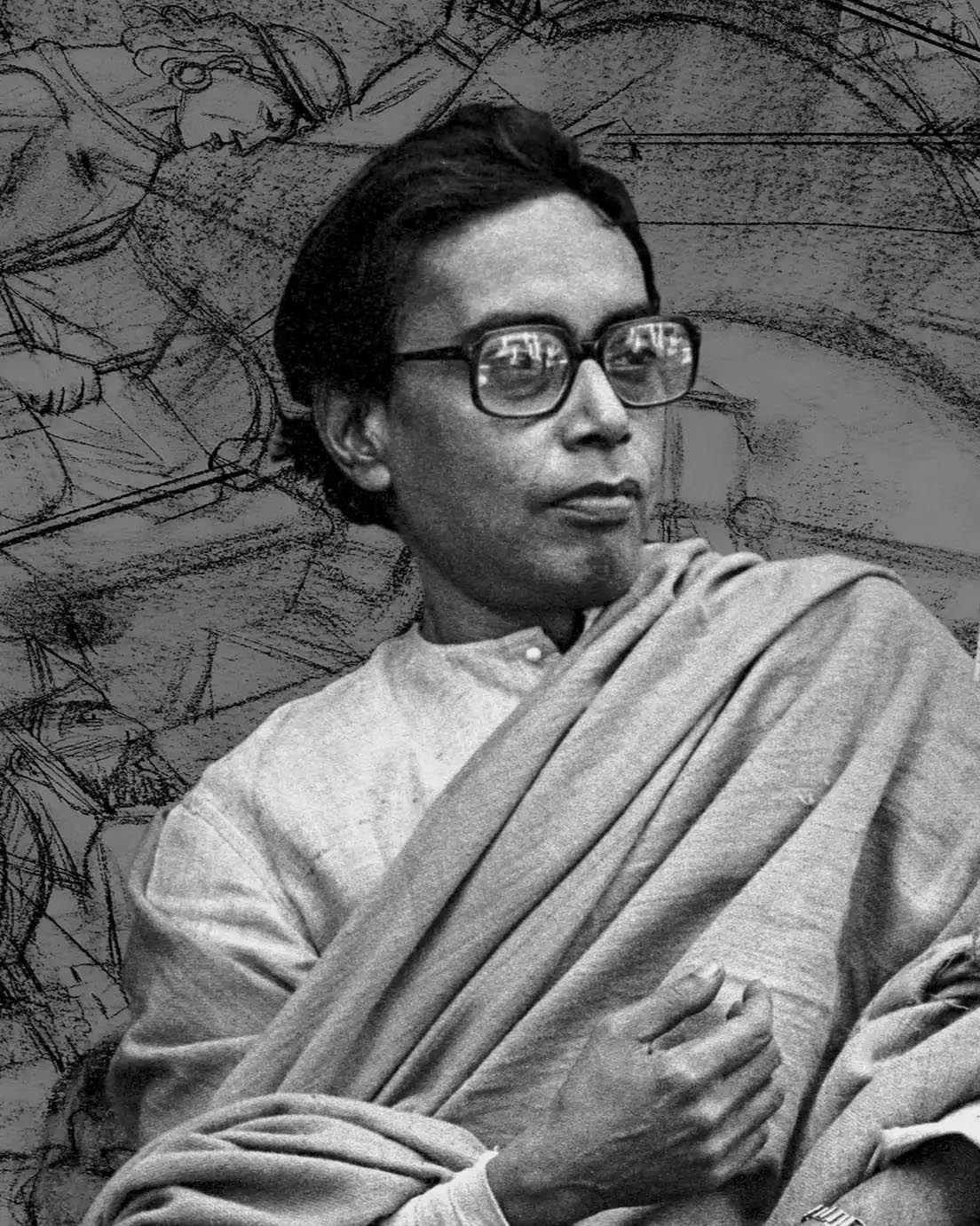
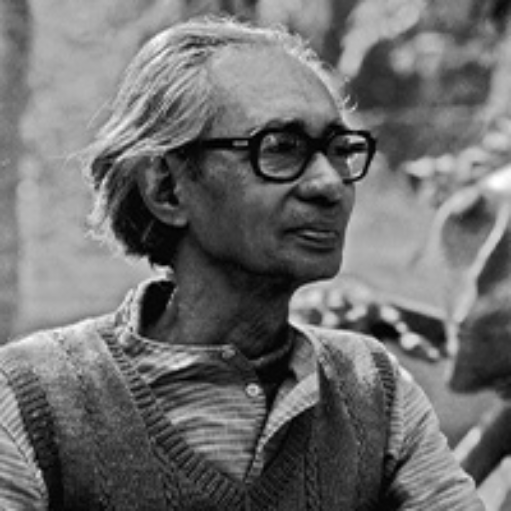
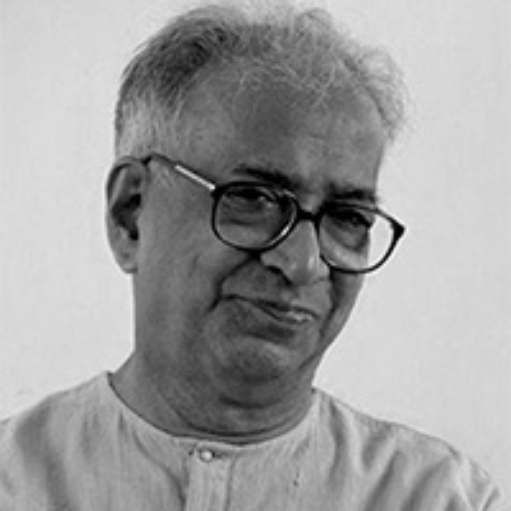
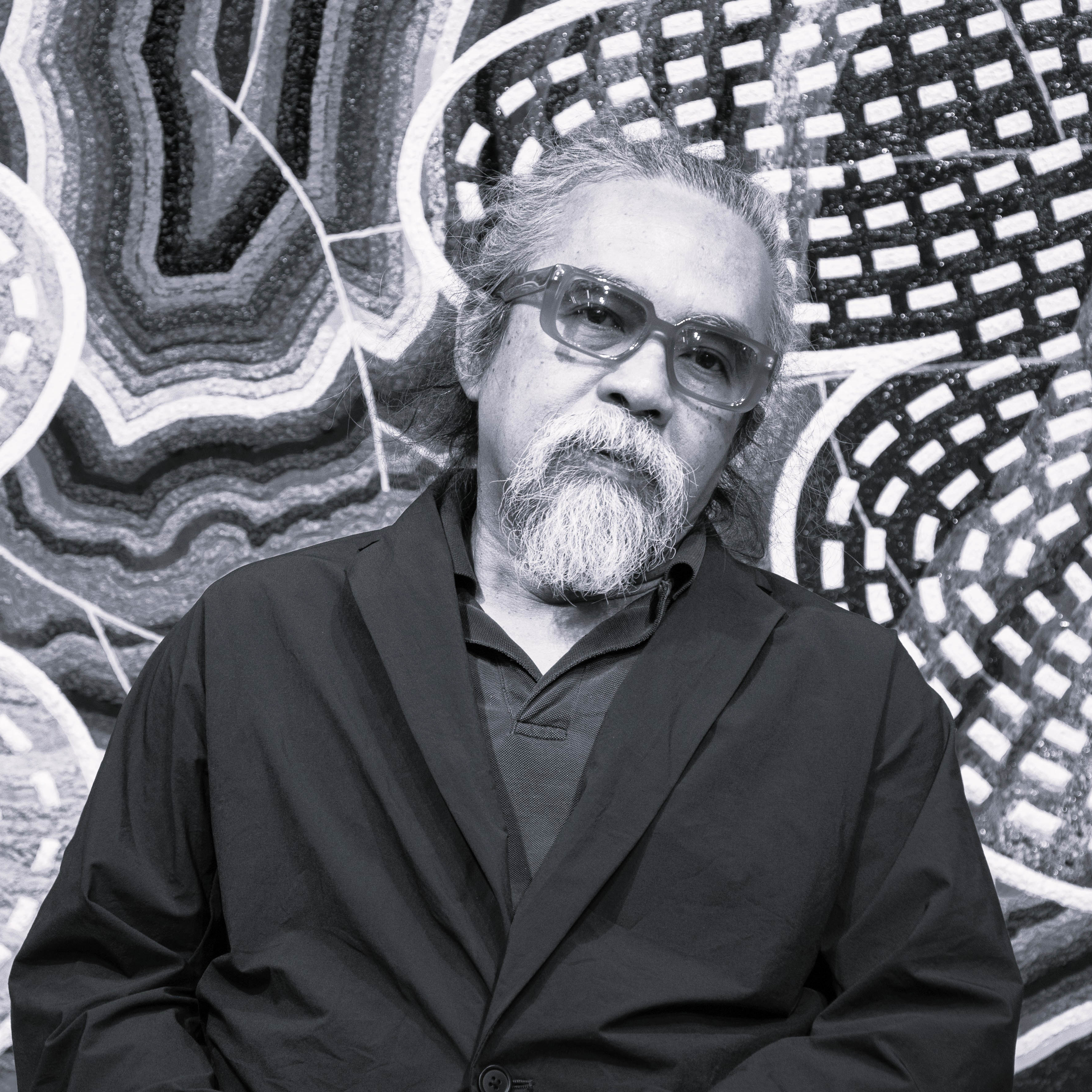
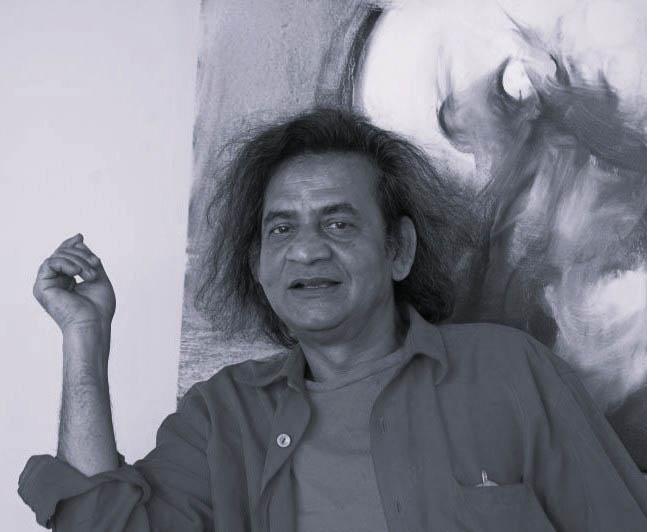
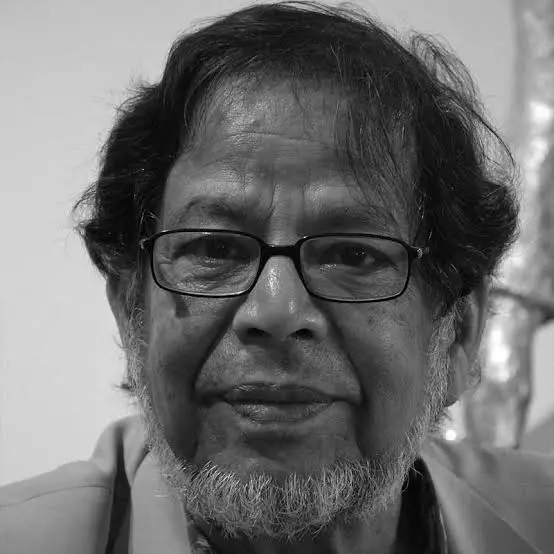
The unfathomable depths of the human mind can be explored through an artist's brush. Legendary artist Ganesh Pyne stands as a true testament to this statement through his paintings serving as a mirror of his own life and experiences. His life was dominated by fantasy stories that he read as a child, losing his father when he was just nine years old, the horror of Calcutta riots followed by the trauma of the partition of India in 1947 – all of which formed the crux of the paintings that he created later in his life. Against this backdrop of trauma, Ganesh Pyne admittedly found some solace in the arms of his grandmother Nandarani, whose narration of folk and mystical tales to him, eventually swaying his mind towards a realm of imagination that became one of the biggest inspirations for his paintings.
Ganesh Pyne completed his training as an artist at the Government College of Art and Craft in Calcutta ( Kolkata) in 1959. In the initial days of his career, he worked as a book illustrator and animator at Mandar Mullick's studio, which shaped his narrative style and attention to detail. In the year 1963, Ganesh Pyne joined the Society for Contemporary Artists, which led him to work closely with other art masters like Bikash Bhattacharjee and Ganesh Haloi. A turning point in his career took place in the 1970s when the legendary artist Maqbool Fida Husain praised him by calling him the best painter India has in modern times in an article published by a renowned magazine of the time 'The Illustrated Weekly of India'.
As an artist, Ganesh Pyne had a widened vision where he drew inspirations not only from Indian artists like Abanindranath Tagore but also from international artists like Rembrandt, Frans Hals and Paul Klee. Apart from them, legendary animation artist Walt Disney and renowned film-makers like Federico Fellini and Ingmar Bergman also left a lasting impression on him. Ganesh Pyne's unique visual language, defined by 'poetic surrealism', set him apart from other contemporary Indian artists. Working primarily in small tempera and gouache paintings, he created haunting yet poetic images characterised by rich black or blue tones, delicate textures, and symbolic figures. His artworks often presented dark symbolisms comprising skeletal forms, mythical creatures, masks, puppets, and dreamlike characters, in order to narrate the turmoil of human life and the unending quest of the human soul to find solace.
Throughout his career, Pyne received widespread recognition in India and abroad. Notable among these were the Gagan Abani Puraskar of 1997, Abanindra Puraskar of 2004 and Raja Ravi Varma Award of 2011, which was awarded to him by the Government of Kerala. He was also bestowed with the Lifetime Achievement Award by the Indian Chamber of Commerce in 2012, thereby recognising his legacy as one of the greatest artists in the realm of Indian modern art.
Despite the awards and accolades, Ganesh Pyne lived a solitary life away from the bustling life of media and artist gatherings. He lived a very private life and refrained from holding major exhibitions. Nonetheless, his unique paintings became some of the highest-priced paintings in the art market throughout the 1980s and the 1990s and continued to be appreciated within the country and abroad until he passed away in March 2013.
To this day, this legendary figure continues to influence the artists who are mesmerised by the emotional depth of his paintings and their ability to transform one's memories and experiences into timeless works of art. Ganesh Pyne, therefore, remains one of the brightest stars in the realm of contemporary Indian art and whose legacy transcends generations of art enthusiasts.